Vacuum bags

Vacuum and barrier bags for chilled and dense products

Vacuum bags should be judged by seal strength, puncture resistance, barrier and how the filled pack behaves under storage and transport.

01Vacuum and tight-seal packaging uses

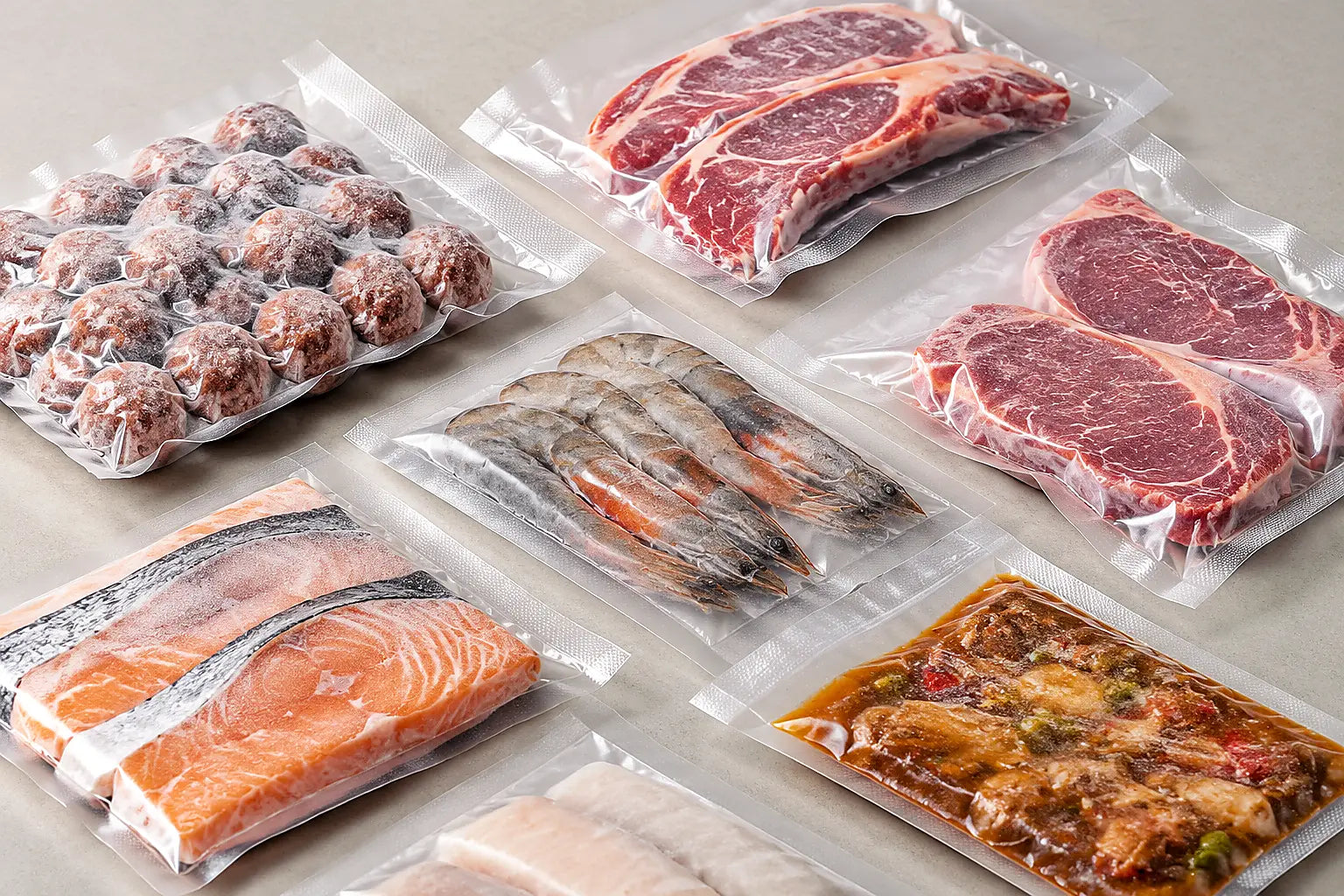
Meat and seafood

High-barrier vacuum packs for chilled or frozen protein where seal integrity and puncture resistance matter.

Cheese and dense foods

Barrier bags for products that need tight contact, oxygen control and clean presentation after packing.

Frozen portions

Bags for frozen food portions where cold handling, edges and carton compression need to be considered.

02Material, structure and finish options to confirm

Barrier and puncture resistance

Material choice should follow oxygen sensitivity, storage temperature, product hardness and whether the pack is vacuumed, frozen or transported in bulk.

Seal width and opening size

Confirm opening direction, seal margin, bag size tolerance and carton arrangement so operators can fill and seal without forcing the product into the bag.

Seal and product condition route

Confirm product shape, edge risk, storage condition, vacuum process and size tolerance before planning structure.

03Print, lamination and bag-making route

Product brief

Confirm product type, size, fill weight or dimensions, storage condition and packing route.

Format choice

Compare the selected bag with adjacent formats before locking structure.

Material and finish

Discuss clear, metallized, matte, gloss, paper-look or other routes only after product use is known.

Print and converting

Check dieline, print colors, barcode, zipper, window, hang hole, seal area and gusset details.

Sample review

Review filled shape, seal margin, print alignment and carton packing before bulk production.

04Choose the practical route before production planning

Food or product needs vacuum packing

Discuss vacuum bag after product and storage condition are clear.

Send: Product type, size, storage condition, vacuum process and quantity.

Sharp or hard product may puncture film

Review sample and material route conservatively.

Send: Product photo, edge risk, packing method and sample need.

Buyer needs retail print plus vacuum function

Plan print area around seal and vacuum performance review.

Send: Print file readiness, seal area, display side and delivery country or region.

05Send these details for quote review

Product type and storage condition

Product dimensions and edge risk

Vacuum process or packing method

Seal area, artwork and sample need

Target size, quantity range and delivery country or region

Material or structure preference if already known

Print colors, surface finish and print file readiness

Dieline, sample photo, current package photo or size sketch

06Compare related packaging formats

Applications

Vacuum and tight-seal packaging uses

Vacuum bags need product, seal, puncture and storage details confirmed before material and size are discussed as production-ready.

Use case

Meat and seafood

High-barrier vacuum packs for chilled or frozen protein where seal integrity and puncture resistance matter.

Use case

Cheese and dense foods

Barrier bags for products that need tight contact, oxygen control and clean presentation after packing.

Use case

Frozen portions

Bags for frozen food portions where cold handling, edges and carton compression need to be considered.

Bag and material fit

Material, structure and finish options to confirm

These options are planning routes, not fixed specifications. Final material and construction should be confirmed against product use, artwork and sample requirements.

Material route

Barrier and puncture resistance

Material choice should follow oxygen sensitivity, storage temperature, product hardness and whether the pack is vacuumed, frozen or transported in bulk.

Production handoff

Seal width and opening size

Confirm opening direction, seal margin, bag size tolerance and carton arrangement so operators can fill and seal without forcing the product into the bag.

Seal and product condition route

Seal and product condition route

Confirm product shape, edge risk, storage condition, vacuum process and size tolerance before planning structure.

Material and print route

Print, lamination and bag-making route

The packaging route connects artwork, material, print, lamination, bag making, QC focus and sample review using confirmed project details.

  1. 01

    Product brief

    Confirm product type, size, fill weight or dimensions, storage condition and packing route.

  2. 02

    Format choice

    Compare the selected bag with adjacent formats before locking structure.

  3. 03

    Material and finish

    Discuss clear, metallized, matte, gloss, paper-look or other routes only after product use is known.

  4. 04

    Print and converting

    Check dieline, print colors, barcode, zipper, window, hang hole, seal area and gusset details.

  5. 05

    Sample review

    Review filled shape, seal margin, print alignment and carton packing before bulk production.

Production check

Test with the actual product

Sharp bones, frozen edges, oily surfaces and heavy fills change the way a bag seals and survives handling. Use real product or realistic samples before approving.

Buying checks

Choose the practical route before production planning

1

When this applies

Food or product needs vacuum packing

Packaging advice

Discuss vacuum bag after product and storage condition are clear.

Send first

Product type, size, storage condition, vacuum process and quantity.

2

When this applies

Sharp or hard product may puncture film

Packaging advice

Review sample and material route conservatively.

Send first

Product photo, edge risk, packing method and sample need.

3

When this applies

Buyer needs retail print plus vacuum function

Packaging advice

Plan print area around seal and vacuum performance review.

Send first

Print file readiness, seal area, display side and delivery country or region.

RFQ details

Send these details for quote review

A useful RFQ connects product behavior, format choice, print file readiness, quantity and delivery country or region so the factory can check the right route.

  • Product type and storage condition
  • Product dimensions and edge risk
  • Vacuum process or packing method
  • Seal area, artwork and sample need
  • Target size, quantity range and delivery country or region
  • Material or structure preference if already known
  • Print colors, surface finish and print file readiness
  • Dieline, sample photo, current package photo or size sketch

Quote request

Send vacuum bag details

Include product shape, storage condition, target size, thickness or barrier need, print file readiness and quantity.

WhatsApp: +86 159 1896 4229 Phone: 15918964229 / 13798182413 Email: sales@yufengpackco.com Address: Jinping District, Shantou, Guangdong, China
Vacuum storage bag valve detail as an application cue
WhatsApp Send brief